
Replication data and the Measure of Voter Equity (MoVE) are collected on the Data page.
Research areas
- Legislative Institutions
- Indigenous Politics & Policy
- Voting Access & Representation
- State Policy
- Methods & Data Releases
Legislative Institutions
How rules, procedure, party organization, and staffing shape what legislatures do — and who benefits — in state chambers and the U.S. Congress.
Published
Debate and Legislative Productivity in US State Legislatures
Abstract, figures & tables
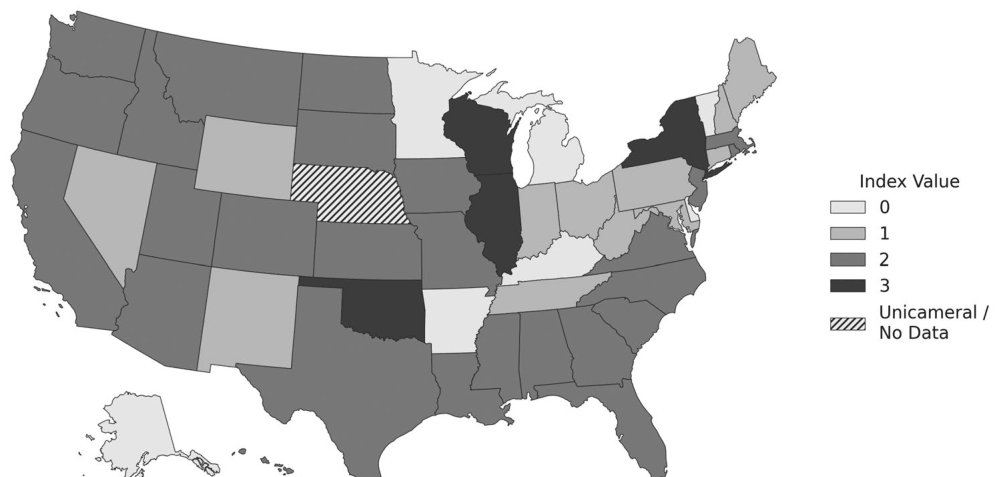
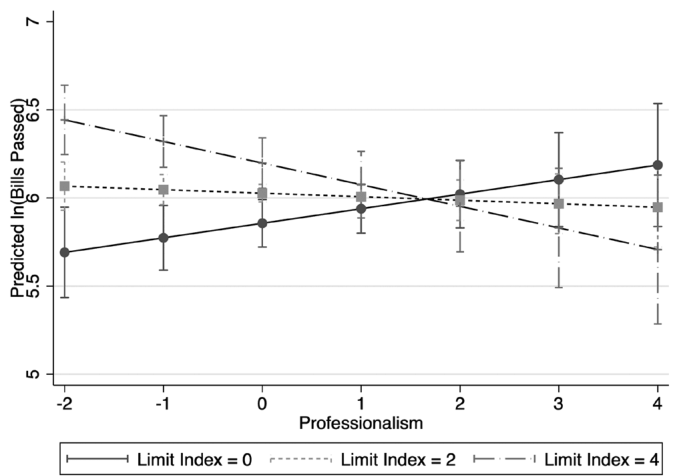
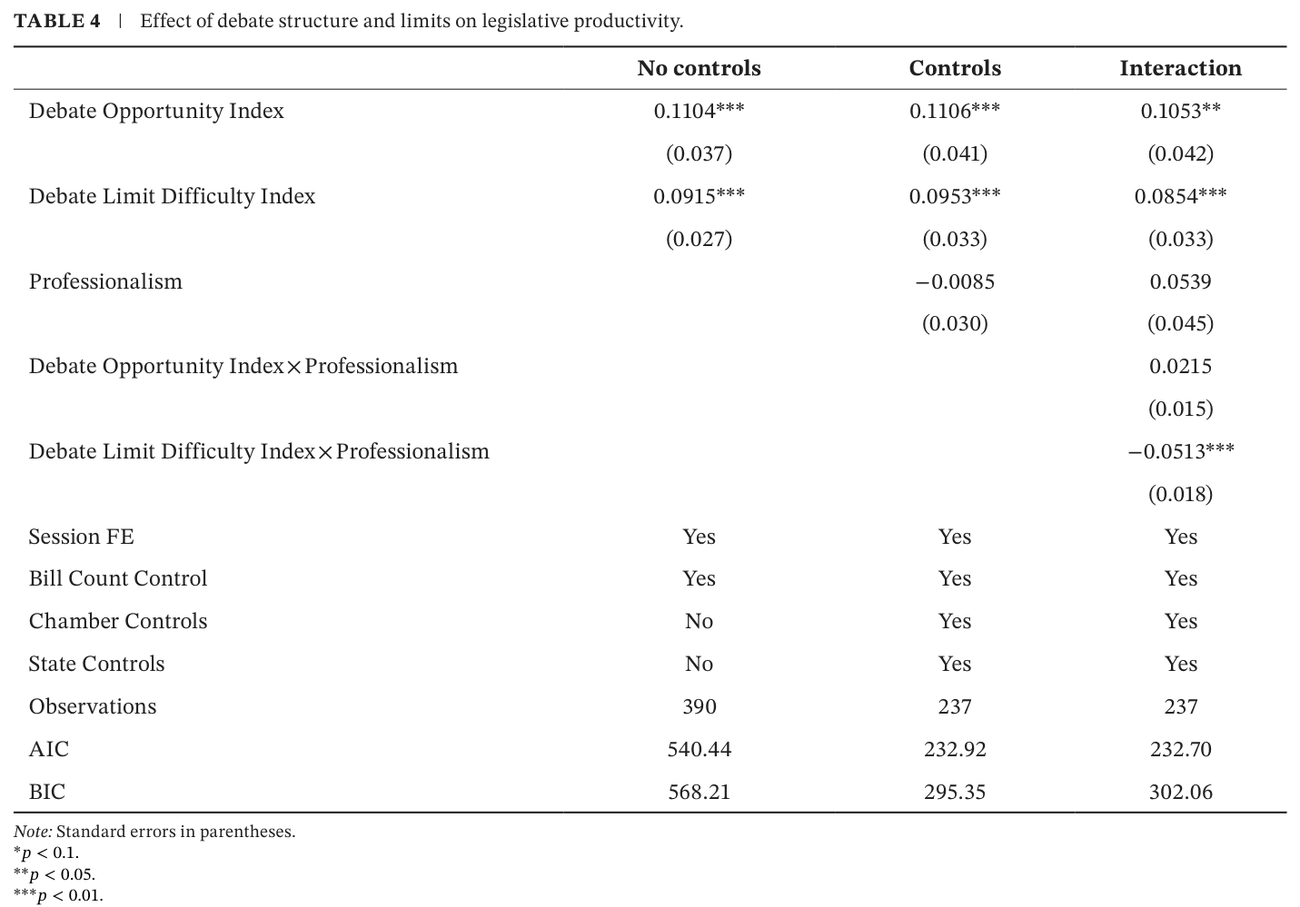
Scholarship holds that procedural rules shape legislative proceedings, but most existing evidence comes from the US Congress' limited procedural variation. This article develops a theoretical framework for how different forms of debate restriction—both limits on member participation and procedural hurdles to closing debate—affect legislative productivity, and how these effects depend on chambers' institutional capacity. Using an original dataset of debate rules and bill progression spanning 2011–2018 from all 99 US state legislative chambers, we show that restrictions on member speaking opportunities and ending debate are associated with higher legislative productivity, with the relationship operating through distinct mechanisms. Procedural hurdles to ending debate are associated with higher productivity in low-professionalism legislatures, while these associations diminish or reverse in more professionalized chambers. These findings demonstrate the conditional nature of debate rules and institutional capacity, offering new insight into procedural designs and the tradeoff between deliberation and efficiency in lawmaking.
What Explains Party Unity? Evidence from U.S. State Legislatures
Abstract, figures & tables
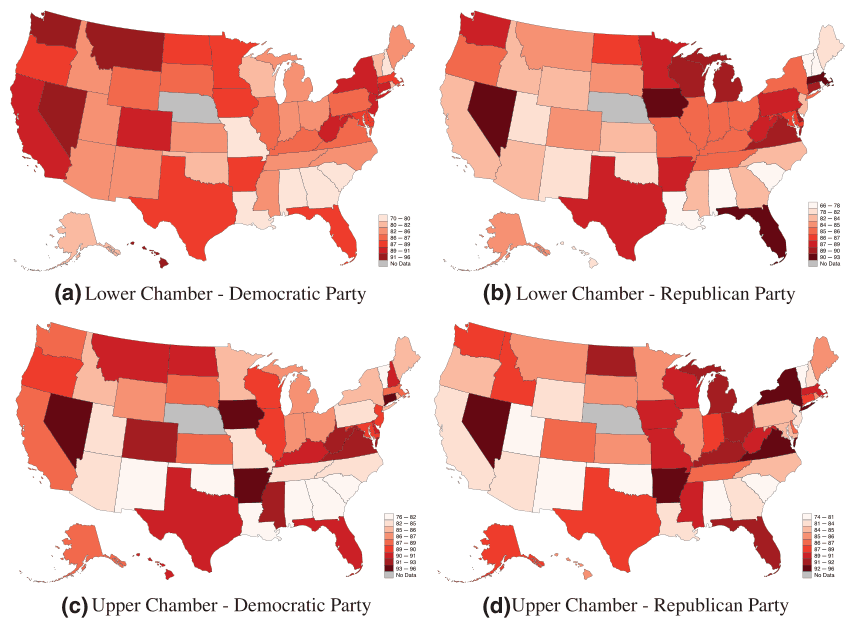
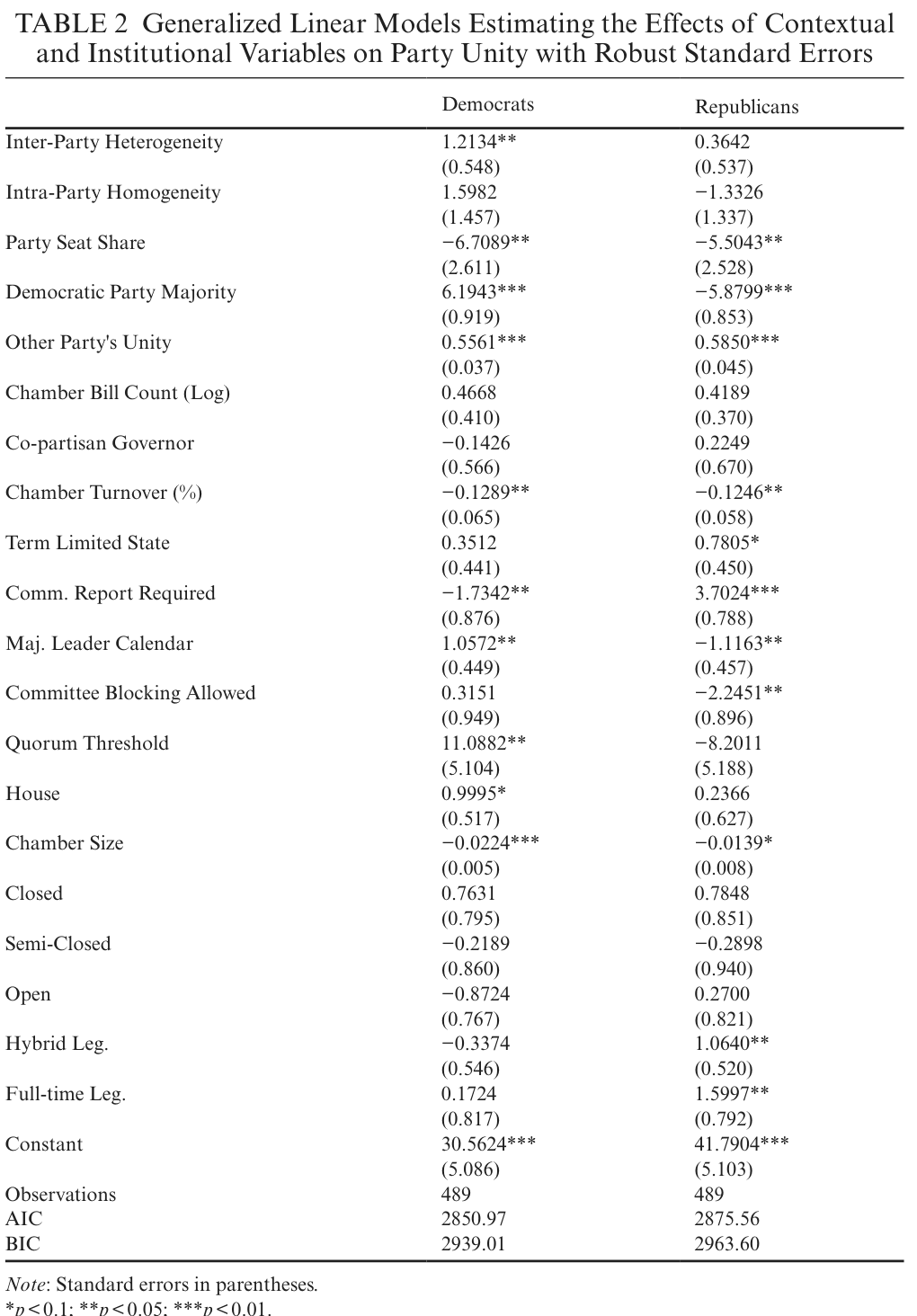
Party unity is central to studying legislative politics and explaining the organization of legislative chambers, passage of policy, and even electoral outcomes. Its effect has been shown at the subnational, national, and international levels. While party unity has been used to explain many phenomena in legislative politics, there is much less known about the determinants of party unity, especially at the subnational level. We leverage a dataset of party unity in 95 U.S. state legislative chambers from 2002 to 2014, to test the impact of party structures, institutional rules, and contextual factors on the level of party unity. We find that majority status, party seat share, and the other party's unity impact party unity similarly for both parties, but the effect of inter-party heterogeneity differs by party. These findings offer a new and unique insight to how partisan theories operate differently within state legislative versus Congressional parties.
Toward a Theory of Minority-Party Influence in the U.S. Congress: Whip Counts, Amendment Votes, and Minority Leverage in the House
Abstract, figures & tables
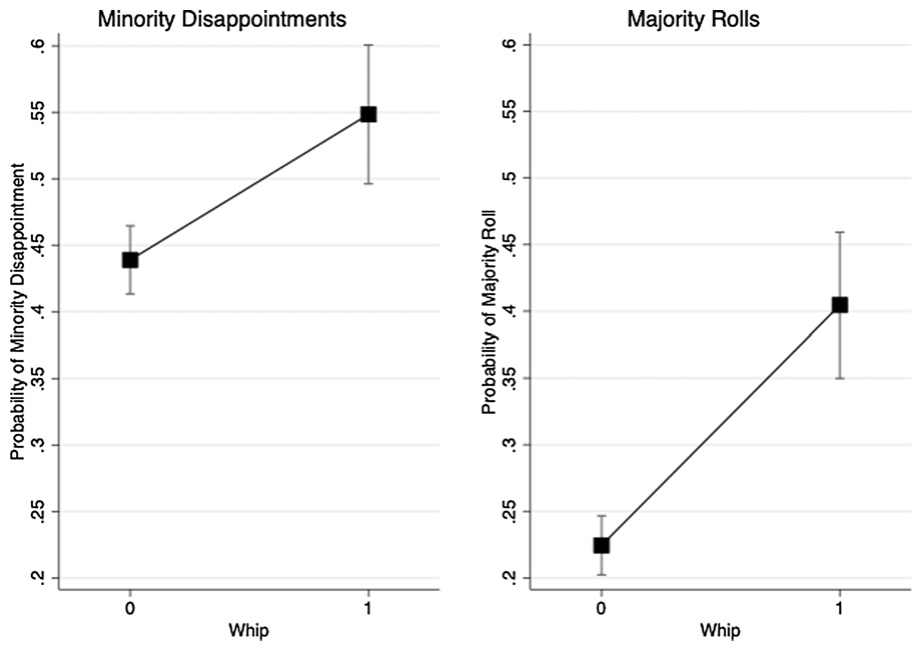
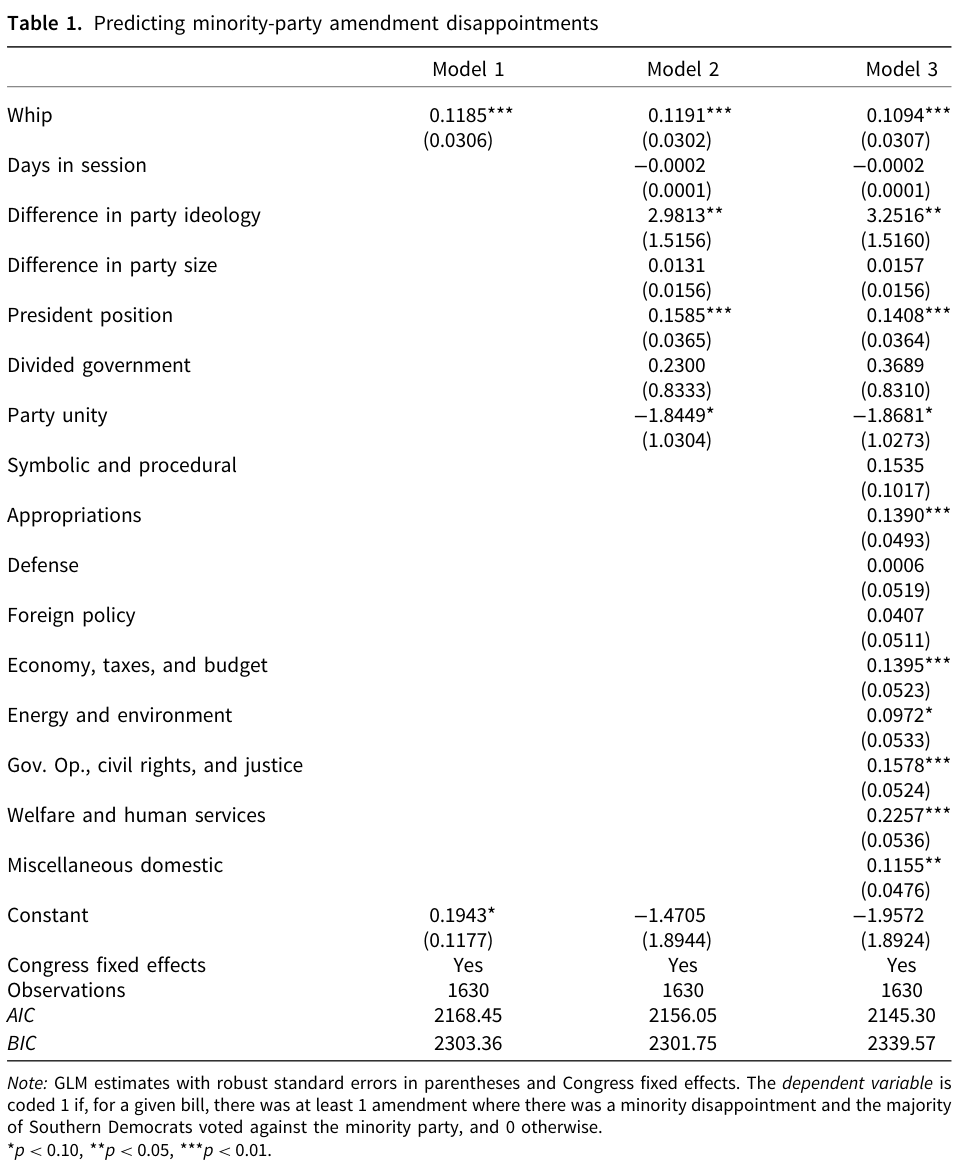
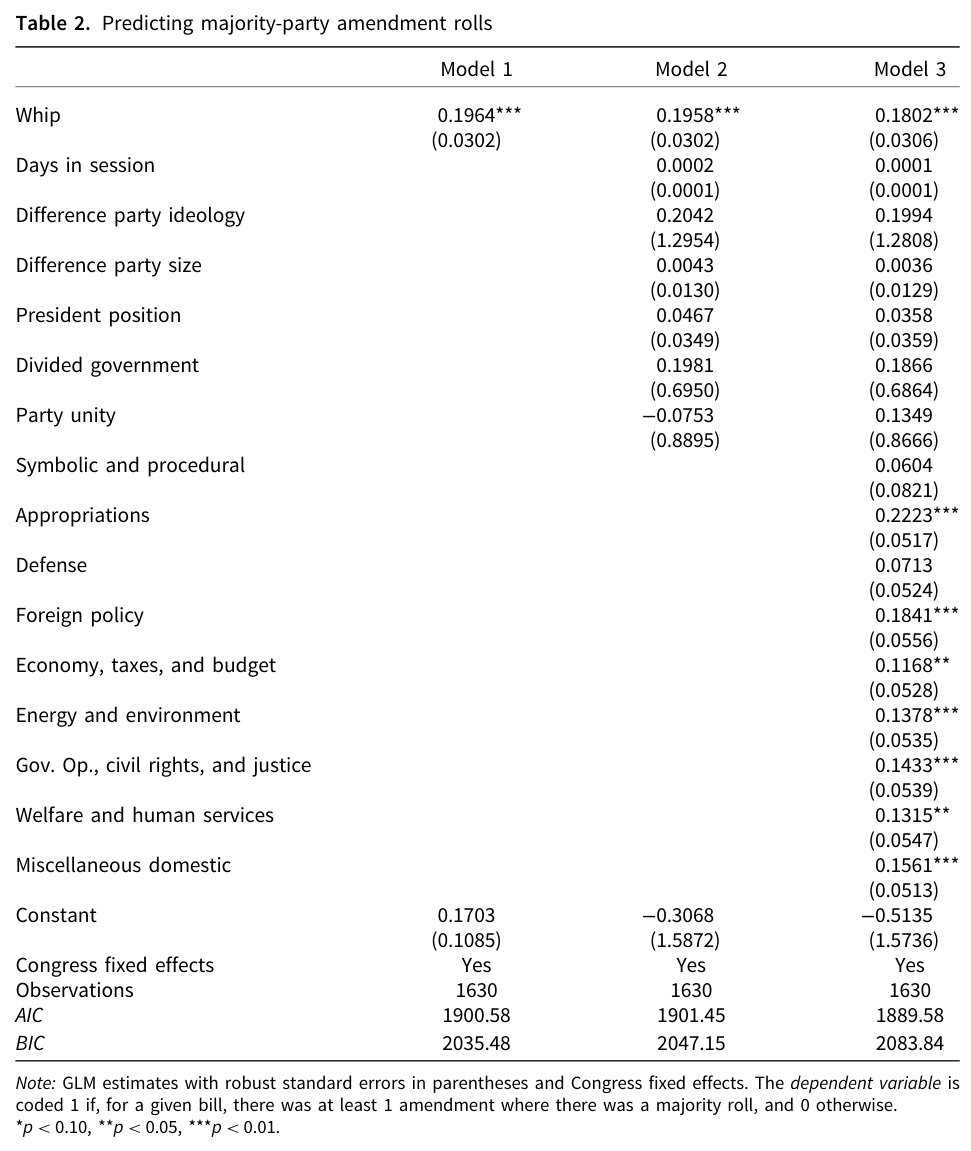
The literature on congressional decision-making has largely ignored the influence of the minority party in the legislative process. This follows from the widely held belief that the majority party dominates the agenda-setting process. Though the minority party rarely achieves major policy success in Congress, we argue that the minority has significantly more influence over the legislative agenda than is commonly believed. We posit that, under some conditions, the minority has enough bargaining leverage to get floor votes on their proposals, in the form of both amendments and bills. We test our theoretical expectations with a novel design utilizing whip count data from the House and show that when a whip count on a bill occurs, the likelihood of a minority amendment disappointment and a majority amendment roll increases, respectively. This suggests that the more leverage the minority party has, the more we see their legislative proposals on the floor.
Allocating Costly Influence in Legislatures
Abstract, figures & tables
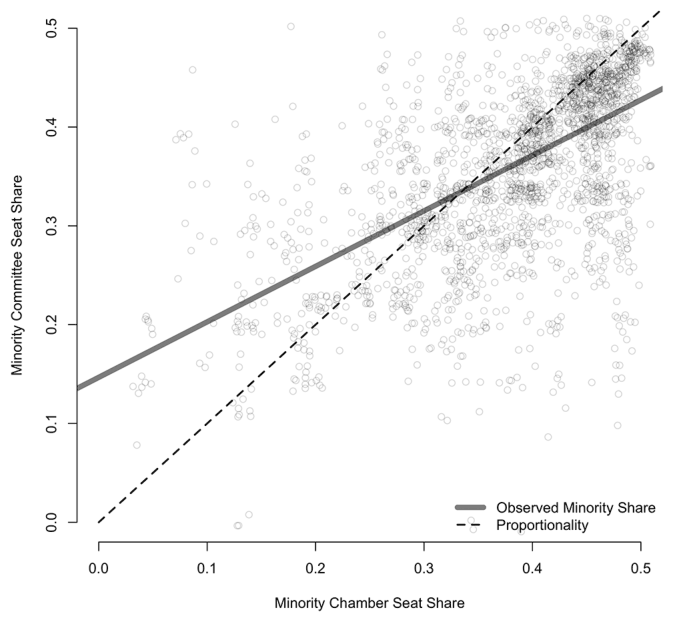
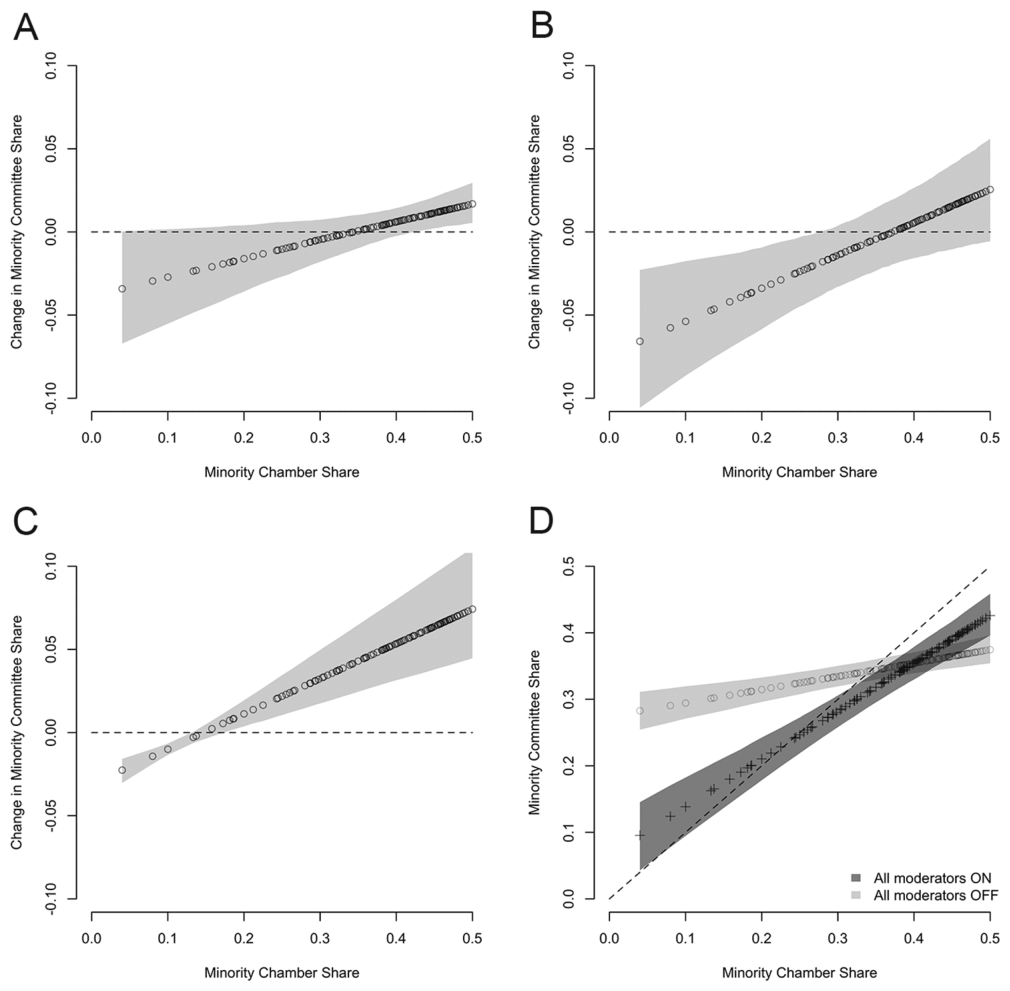
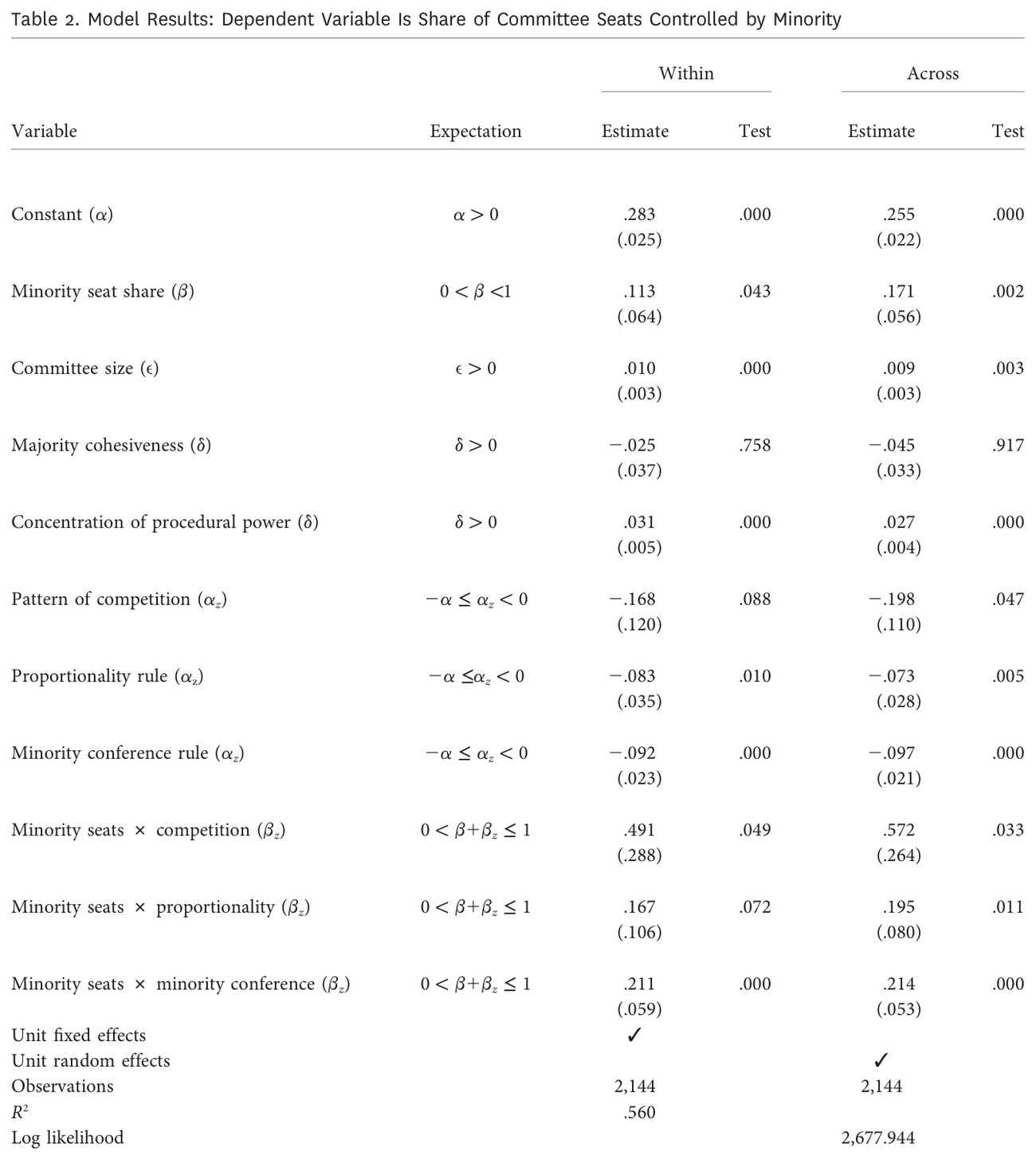
Committee seats endow holders with both policy influence and labor obligation. These benefits and costs present the organizational majority with an interesting choice: how many seats should it allocate to the opposition? We present a theoretical framework for understanding the allocation of committee seats by the majority coalition that incorporates both procedural and electoral concerns in the decision calculus and predict that when the majority is strong, the minority will be overrepresented on committees, but when the majority is weak, the minority will be underrepresented. Mechanistic, institutional, and contextual moderators to this choice framework are also discussed. We test our predictions by examining original data on the composition of over 2,000 committees across 98 American state and federal legislative chambers. The analysis yields strong support for our central predictions while suggesting interesting and intuitive contextual constraints on the majority’s tendency to exploit its position.
Compensation, Opportunity, and Information: A Comparative Analysis of Legislative Nonresponse in the American States
Abstract, figures & tables
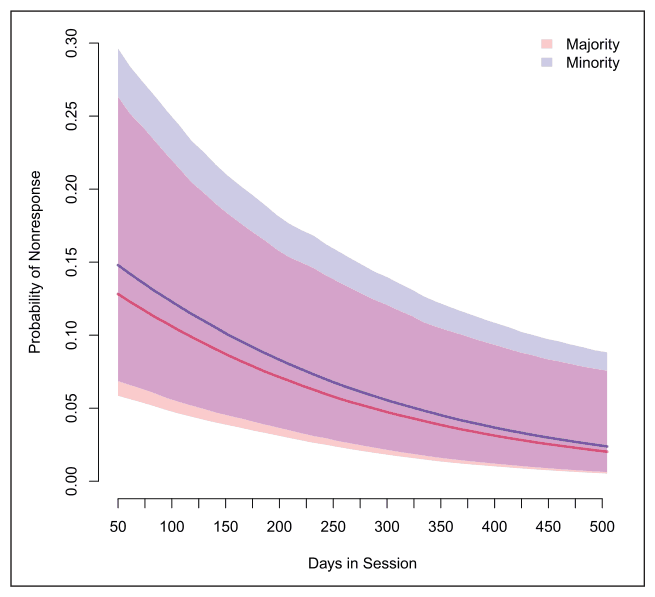
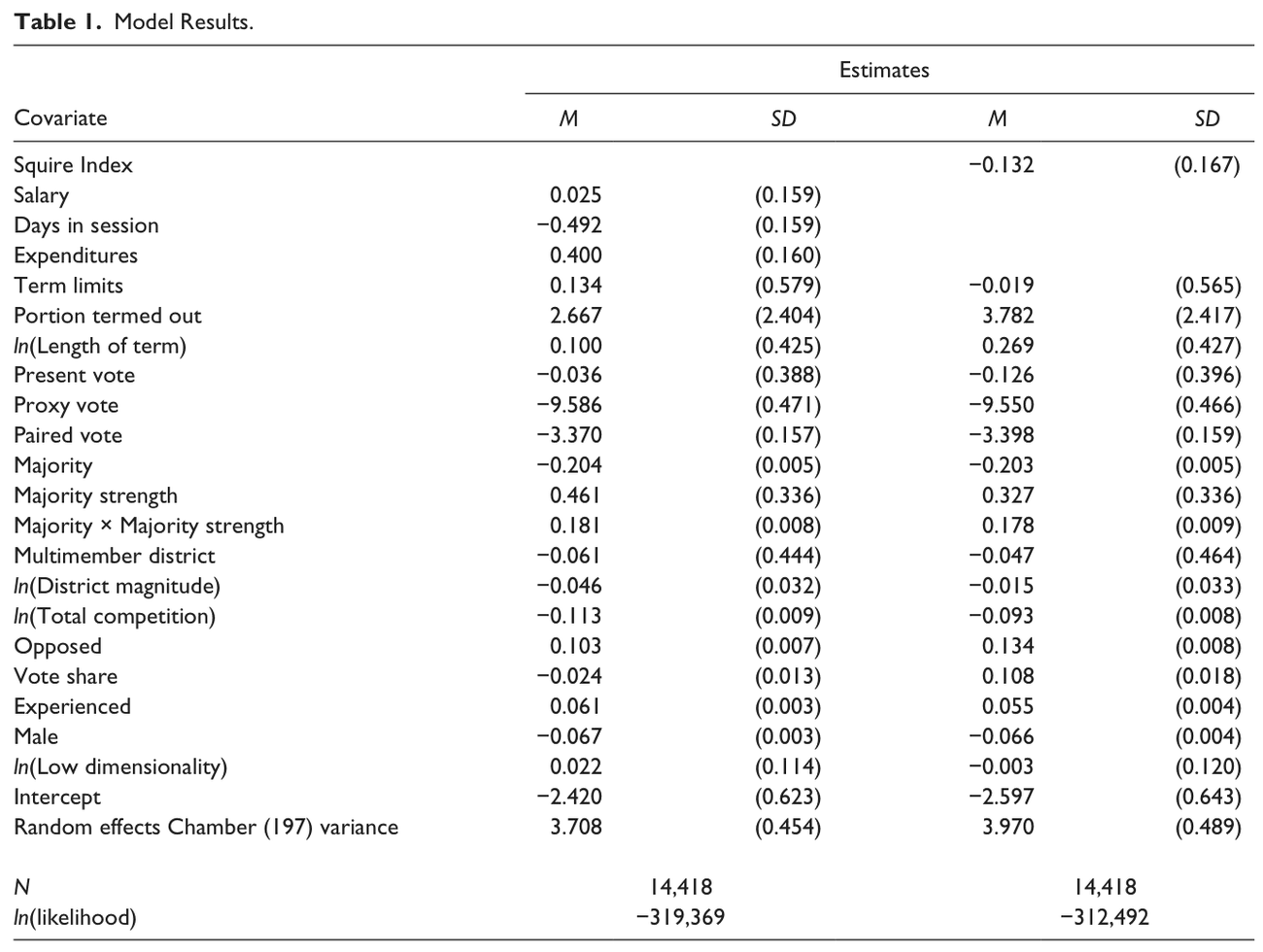
We present a parsimonious framework for understanding contextual variation in legislative nonresponse. We argue that legislators’ propensity to vote is a function of their willingness and ability to be physically present in the chamber and determine the best position to take on a given proposal. From this framework, we derive four hypotheses regarding the compensation legislators receive, their opportunity to pursue work outside of the chamber, and their informational resources. Analyzing data on over seven million voting opportunities across two sessions in ninety-nine chambers, we find robust evidence that longer legislative sessions decrease nonresponse and that informational resources increase nonresponse, but no evidence that compensation influences nonresponse.
Under Review & Revise and Resubmit
When Process Becomes Power: Rules, Parties, and Legislative Effectiveness
Invisible Hierarchies: Gender, Race, and the Placement of Congressional Staff
Works in Progress
Examining Institutional Stickiness: The Political Determinants of Legislative Rule Change in American State Legislatures
Under (Electoral) Pressure: How Political Cycles Explain Staffing Capacity in the United States Senate
Who Represents the Representatives? How Identity and Partisanship Shape Congressional Staff Diversity
Decisions, Decisions: The Political Economy of Congressional District Offices
Overburdened or Underutilized: An Examination of Women’s Committee Assignments in State Legislatures
The Effect of the Information Environment on Party Cohesion: Evidence from U.S. State Legislatures
The Role of the Economy in the Assignment of Committee Seats to Minority Party Members
Indigenous Politics & Policy
How the structure of Native American tribal governments shapes intra-tribal, inter-tribal, and federal relationships and policy outcomes — mostly with a pan-tribal approach.
Published
Boosters and Barracks: The Political Economy of Indian Industrial Schools
Abstract, figures & tables
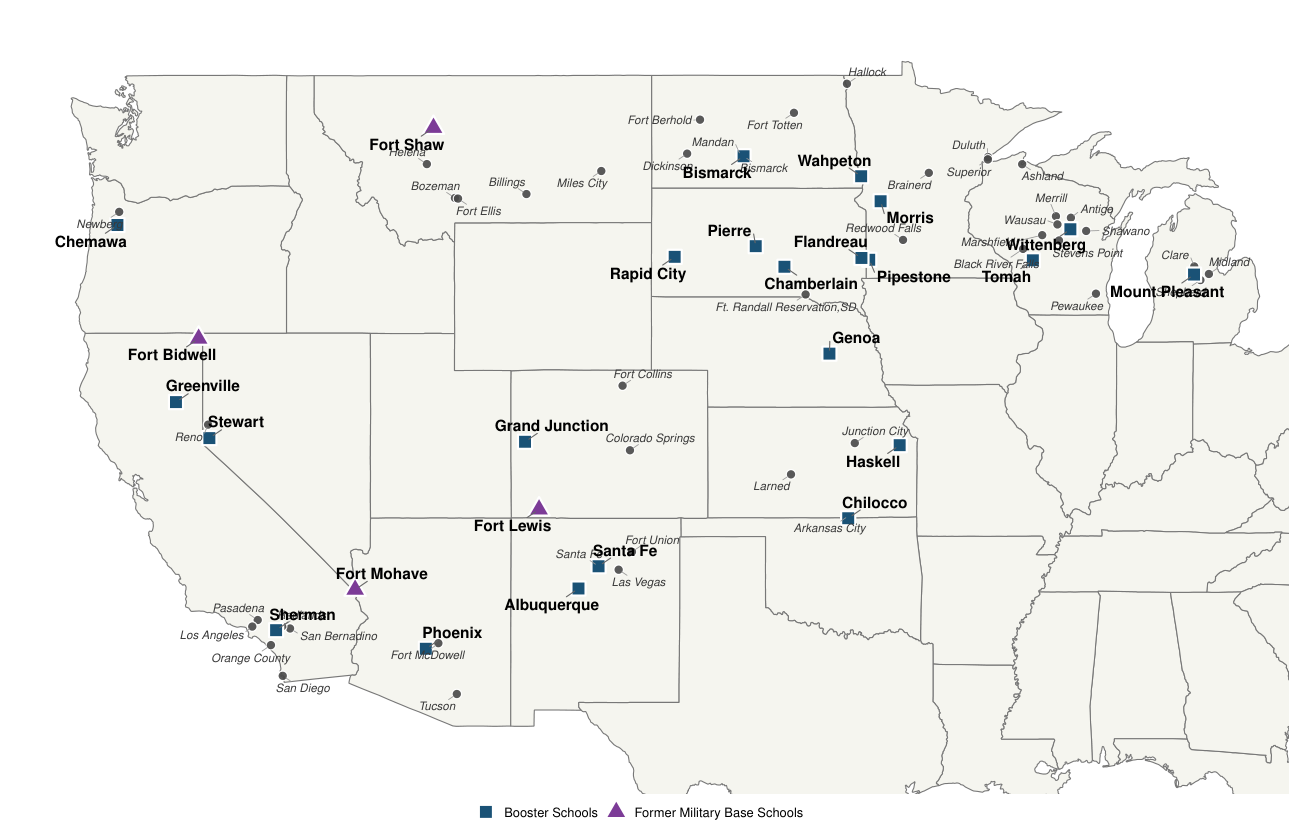
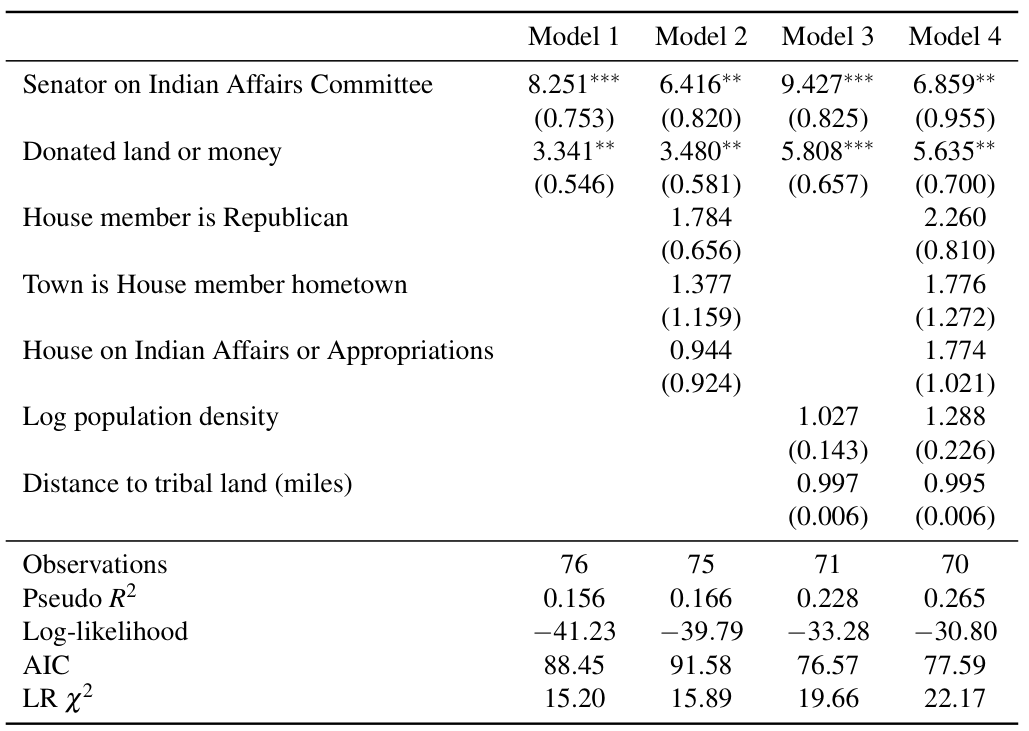
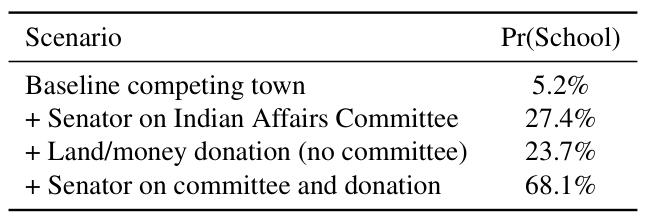
Scholars, advocates, and survivors of American Indian industrial boarding schools have documented the harm these institutions have inflicted on tribal communities and individuals subject to separation from families and communities, denial of culture, and in some cases abuse and death. Less well understood is that these schools also functioned as distributive policies that economically benefited Euro-American settler communities. In states with sizable American Indian populations, settler communities lobbied aggressively for the schools and competed with nearby towns for the jobs, service and supply contracts, and student labor that these institutions provided. Schools were seen as a boon for local economic development, including as tourist attractions, and as a steady source of government resources in a period of economic uncertainty. Local business boosters donated land and money as part of the lobbying efforts. Congressmen delivered these schools to claim credit for constituency service. We examine these dynamics in an analysis of the placement of all off-reservation Indian industrial boarding schools from 1880–1908 using contemporary newspaper accounts. We analyze an original database of school site selection and Congressional support, showing that school placement was a political calculation, tying together the interests of local economic elites and ambitious members of Congress. Indian industrial schools offer a lens into how assimilation policies were advanced through political channels in response to Euro-American demands for economic development and access to land.
The Political Economy of Climate Action in Indian Country
Abstract, figures & tables
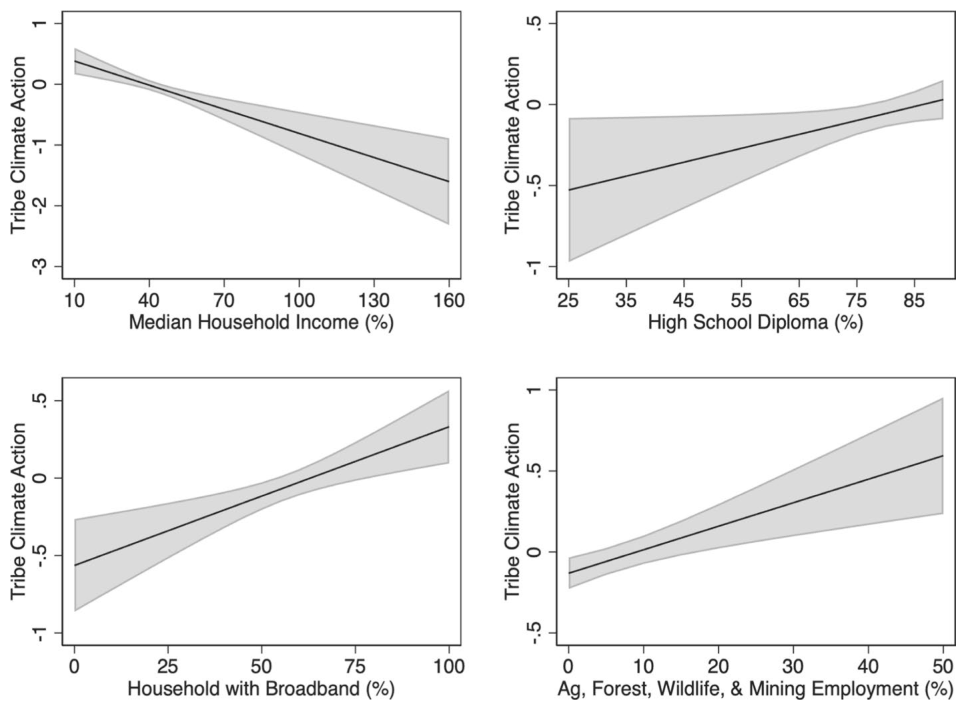
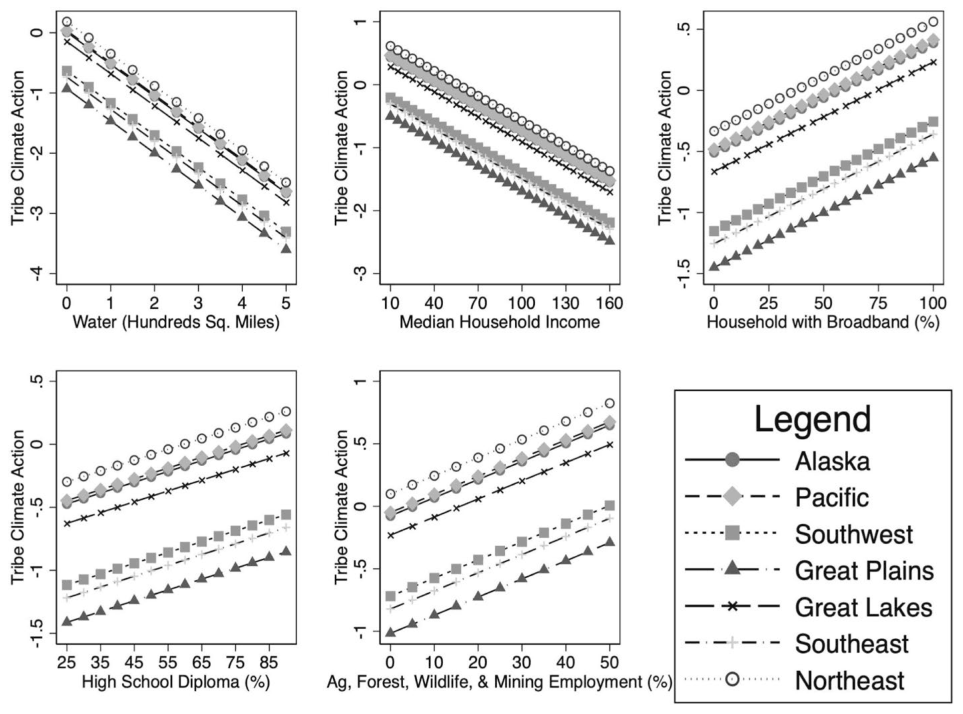
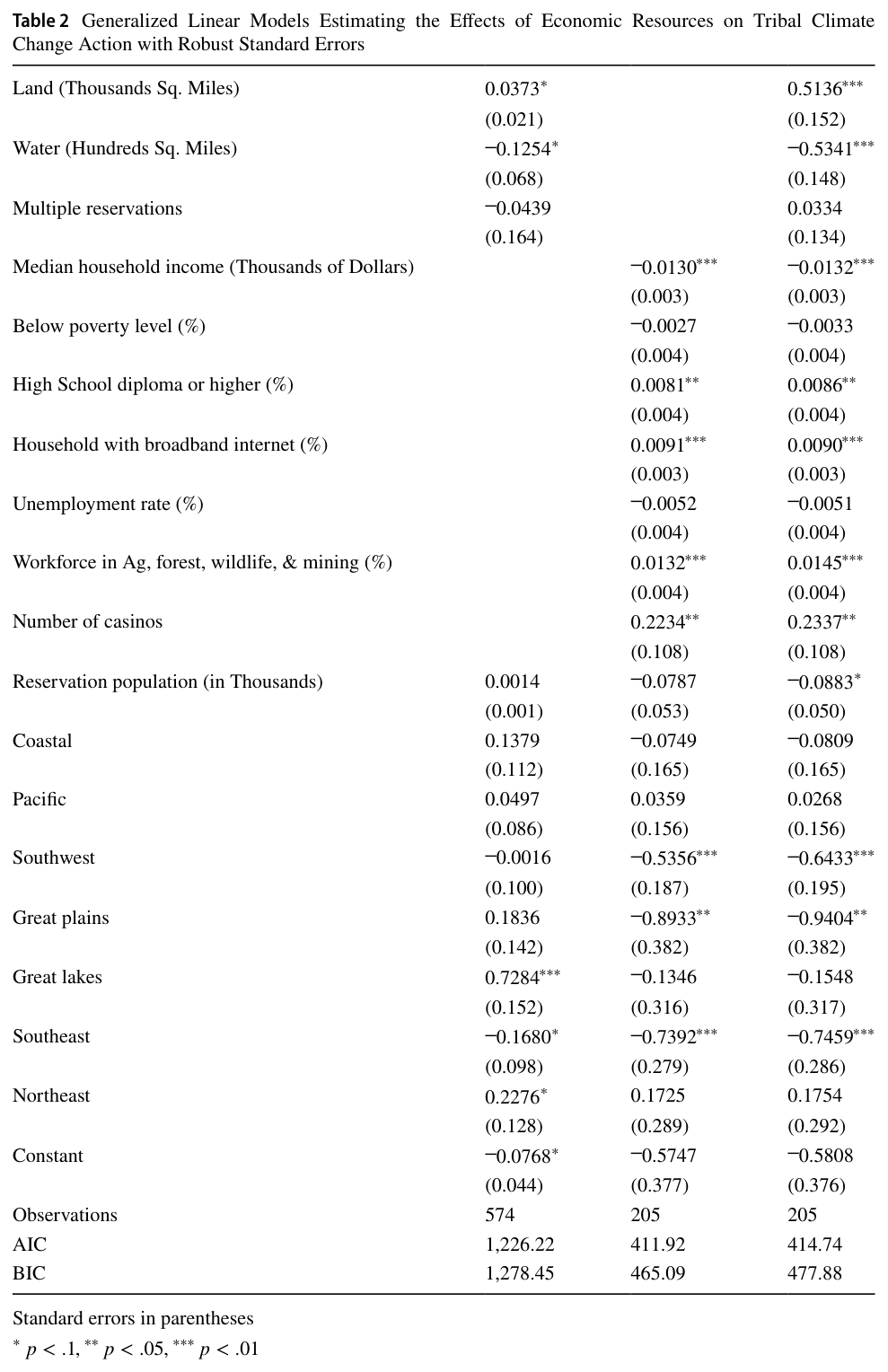
The public choice literature has long considered the political economy of environmental regulation and has examined a variety of national and subnational governments’ environmental policies aimed at adaption to climate change. However, there has been little attention paid to the determinants of environmental adaptive actions taken by indigenous governments. Given many indigenous peoples’ heightened vulnerability to issues caused by climate change, it is important to understand when and why they take action to adapt to climate change and what obstacles may stand in the way. I argue that natural resource abundance, informational resource access, population vulnerability, and reliance on natural resources will impact whether indigenous governments enact policies to respond to climate change. Using an original dataset of tribal actions addressing climate change for 574 federally recognized tribal governments, I find that the amount of land, educational attainment, broadband access, and proportion of tribal members working in the natural resource industries are positively associated with the tribal government’s responses to climate change.
Under Review & Revise and Resubmit
The Ties That Bind Us: Exploring the Financial Relationship between Native American Tribes and the U.S. Federal Government
Voting Access & Representation
Who can vote easily, and how the rules and offices that run elections shape who is represented — from county election offices to Indian Country.
Published
Measuring Voter Equity at the Local Level
Abstract, figures & tables
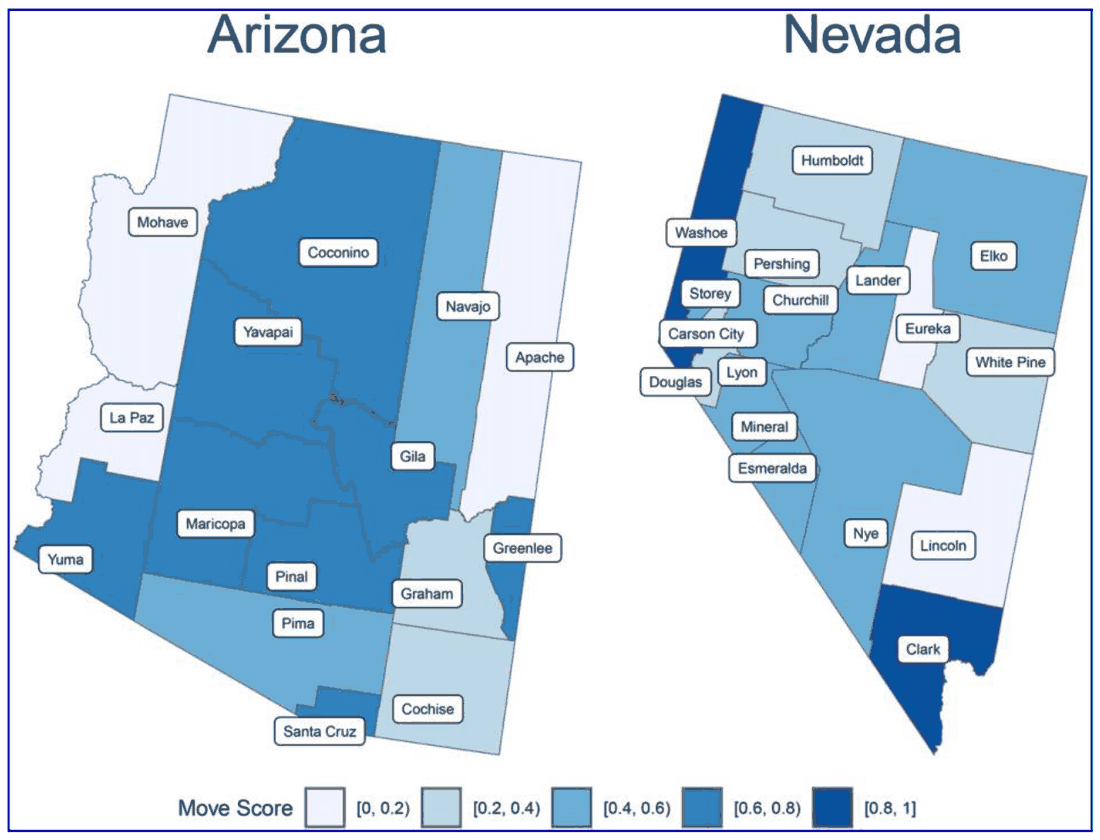
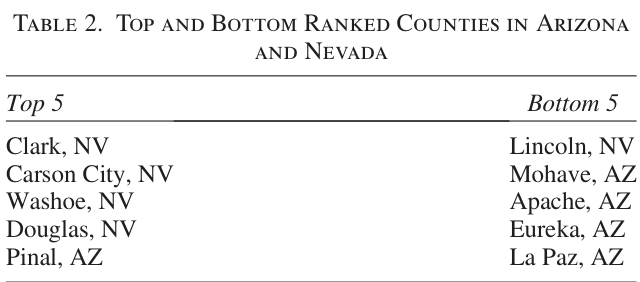
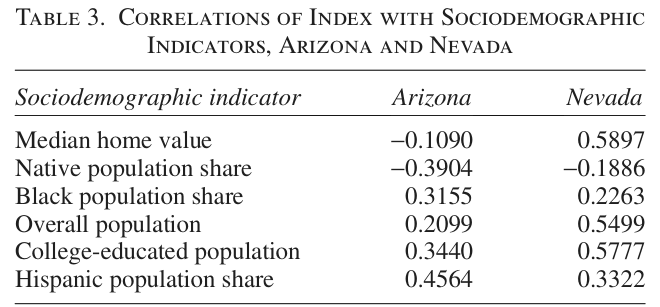
A basic premise of democracy is that all citizens have an equal opportunity to participate in governance via the ballot. Decades of research have shown that electoral access is inequitable even if it is equal—meaning that while most have the right to vote, some face greater barriers than others. One of the challenges in assessing the degree of electoral equity in the United States is that the country does not have a single electoral system; instead, it consists of multiple systems at the state and local levels. The local level of election administration is a critical aspect of the U.S. electoral system, with important implications for voter access. Voting access varies widely within states depending on service provision by local election officials. To better understand the role of local election administration and its impact on voters, we develop a novel, empirically grounded tool for measuring local-level voter access: the Measure of Voter Equity (MOVE) index. To construct this measure, we conducted an intensive pilot data collection project at the county level in two states—Arizona and Nevada. We find that rural counties in both states have significantly lower levels of access. The MOVE index, along with its subcomponent scores, offers a comprehensive measure of voting access at the local level that can be used by scholars and policy practitioners to more precisely assess electoral equity.
Under Review & Revise and Resubmit
Voter Equity in Indian Country
Works in Progress
Electoral Competition, Partisan Control, and the Uneven Geography of Voter Equity
State Policy
How subnational policy choices shape essential services and the incentives states offer.
Published
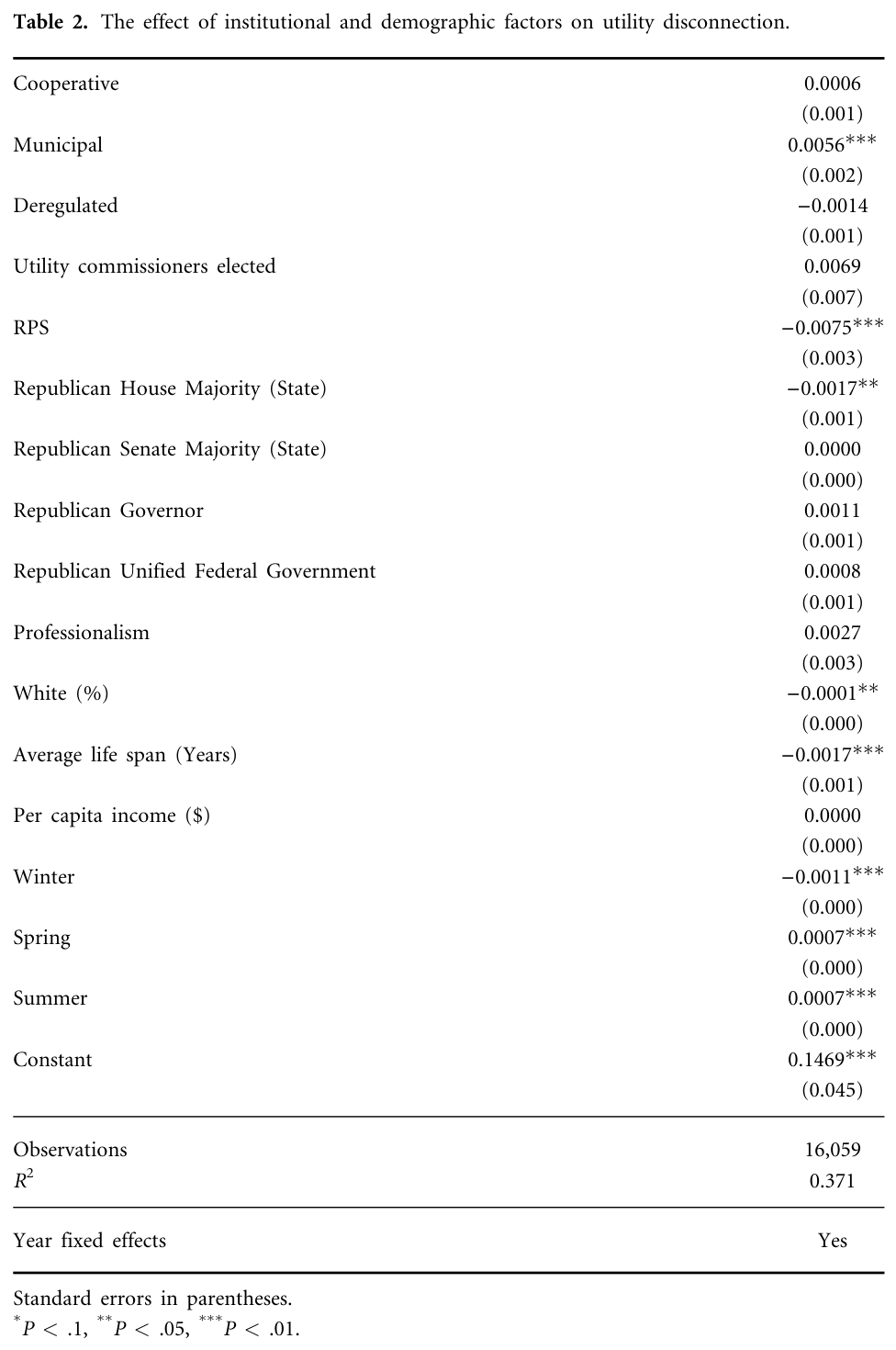
Lights Out: Political and Economic Determinants of Electricity Shutoffs in the United States
Abstract, figures & tables
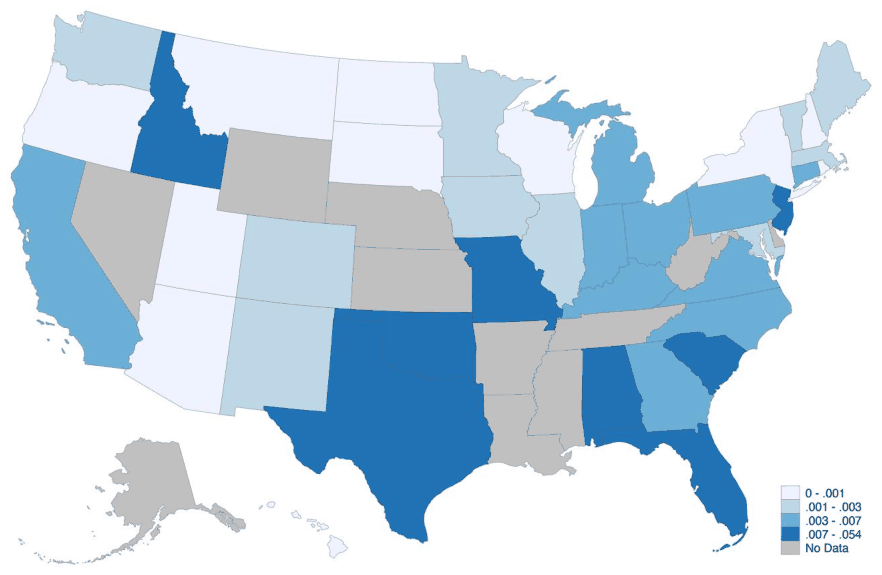
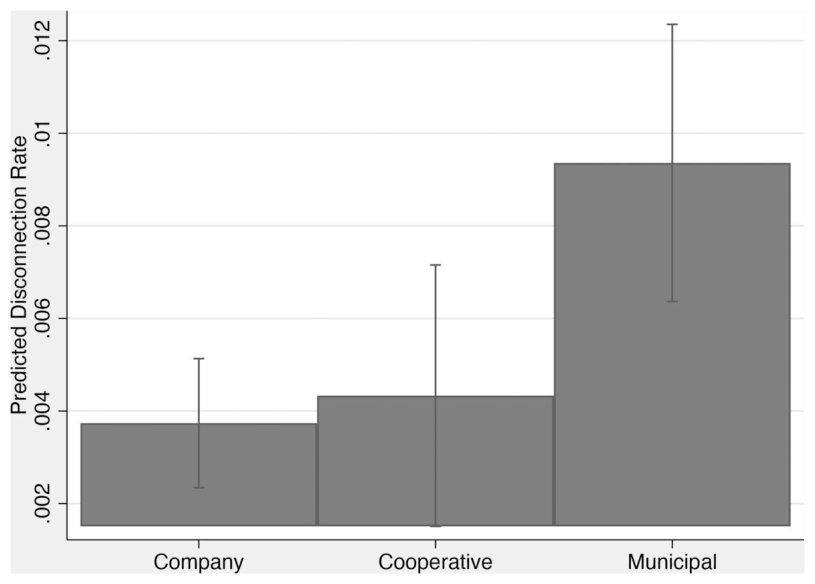
In the United States, state governments play an essential role in balancing the interests of consumers and electricity providers. While scholars have explored how regulations are crafted, less attention has been paid to the impact of regulation, particularly on the disadvantaged. By analyzing data on over two decades of disconnections, we find that investor-owned utilities have significantly lower disconnection rates than municipal utilities, despite the latter’s public-oriented mandate. We contend that the public-facing nature of municipalization makes unpopular redistribution more visible (and hence provided at lower levels) compared with private investor-owned utilities. We also find that having a renewable portfolio standard is associated with lower levels of disconnection, whereas deregulation and the direct election of commissioners have no discernible effect. These findings underscore how subnational policy variations shape essential service provision in the United States and have broad implications for regulation and human capital, given possible federal volatility in electricity policymaking.
Works in Progress
Surveying the Institutional and Political Landscape of State Electric Vehicle Subsidies
Methods & Data Releases
How survey design affects what we can learn about political behavior, and data released for other researchers to use. The Measure of Voter Equity (MoVE) and replication files are on the Data page.
Published
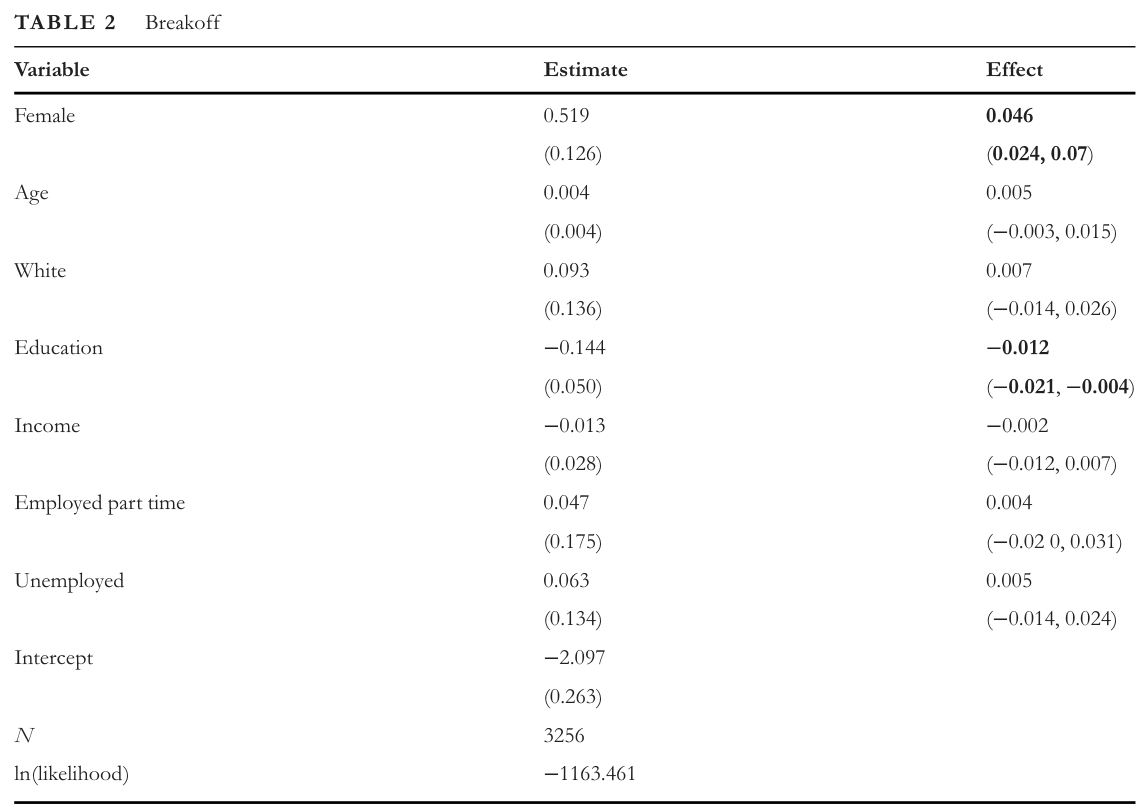
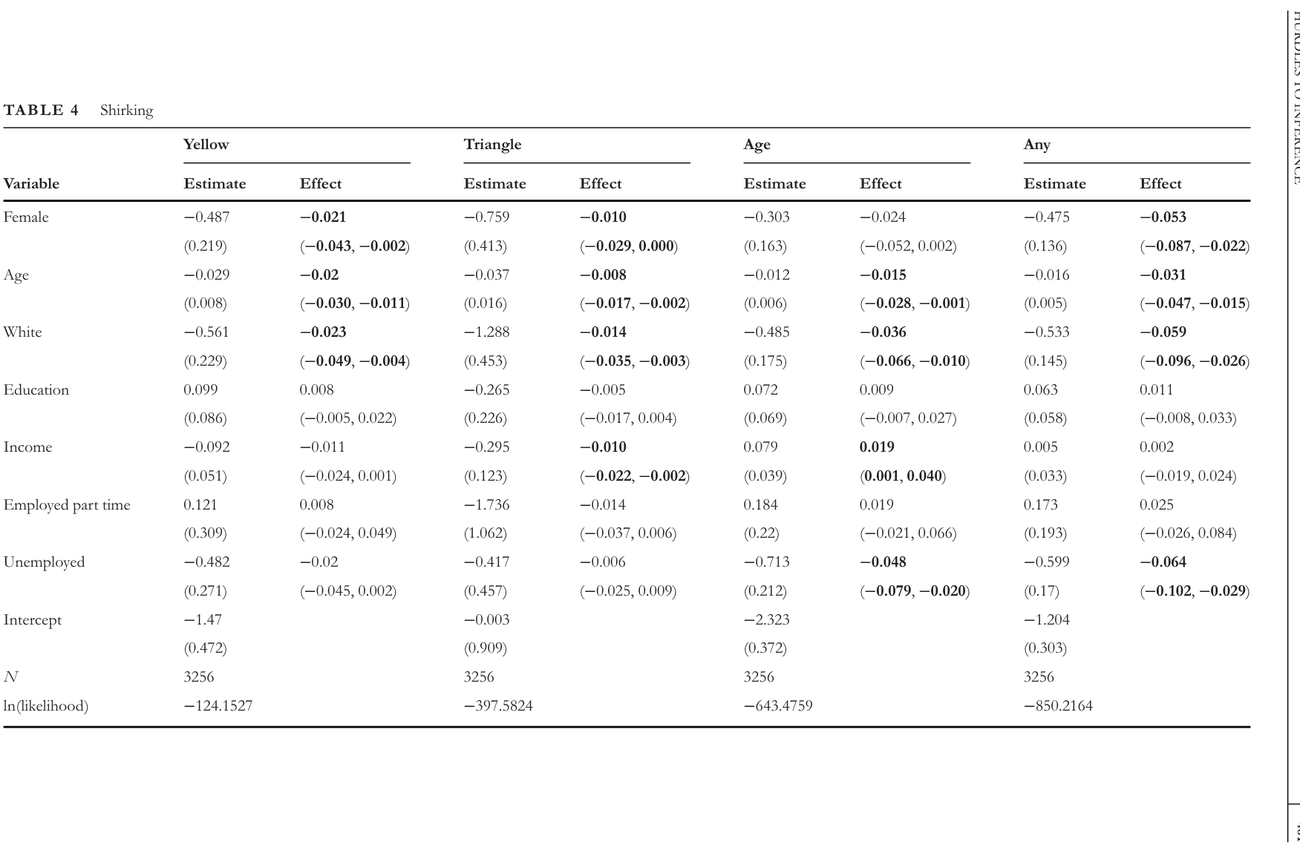
Hurdles to Inference: The Demographic Correlates of Survey Breakoff and Shirking
Abstract & tables
Objective. Various shirking behaviors in survey-taking can inhibit researchers’ ability to draw unbiased inferences from the resulting data. We define three types of shirking behavior, identify their demographic correlates among survey respondents, show how shirking may lead to biased or incorrect inferences, and offer suggestions for navigating these threats. Methods. We analyze responses from a large (N=3,256), representative survey of Americans, identify indicators of three types of shirking, and regress these indicators on survey firm administrative data on respondent characteristics to discover the respondent characteristics associated with different shirking types. Results. The data suggest women are more likely to break off during a survey, while men are more likely to shirk while completing the instrument. In addition, young, less educated respondents are more likely to use straight-lining or other satisficing tactics. Conclusion. Systematic differences in shirking behaviors across these demographic groups make us likely to misunderstand the (reported) social behavior of women and men, young and old, or more and less educated, in different ways. This is particularly problematic for testing behavioral theories that generate gender, age, or education-specific predictions, or, predictions regarding attitudes or behaviors that strongly correlated to these characteristics.
Book Project
Legislative Process in the American States. With Nicholas O. Howard.
Book Reviews
Review of The Illusion of Accountability: Transparency and Representation in American Legislatures by Justin H. Kirkland and Jeffery J. Harden. Political Science Quarterly 140(1): 204–206, 2025 · PDF · Publisher
Review of Voting in Indian Country: View From the Trenches by Jean Reith Schroedel. Journal of Policy Analysis and Management 43(2): 636, 2024 · PDF · Publisher
Legislative Institutions
How rules, procedure, and party organization shape what legislatures do — and who benefits — in state chambers and the U.S. Congress.
Published
Debate and Legislative Productivity in US State Legislatures
With Nicholas O. Howard · Legislative Studies Quarterly, 2026 · PDF · Appendix · Publisher
What Explains Party Unity? Evidence from U.S. State Legislatures
With Nicholas O. Howard · Legislative Studies Quarterly, 2024 · PDF · Appendix · Publisher
Toward a Theory of Minority-Party Influence in the U.S. Congress: Whip Counts, Amendment Votes, and Minority Leverage in the House
With Jeffery A. Jenkins and Nathan W. Monroe · Journal of Public Policy, 2023 · PDF · Appendix · Publisher · Replication
Allocating Costly Influence in Legislatures
With David Fortunato and Nathan W. Monroe · Journal of Politics, 2022 · PDF · Appendix · Publisher
Compensation, Opportunity, and Information: A Comparative Analysis of Legislative Nonresponse in the American States
With David Fortunato · Political Research Quarterly, 2017 · PDF · Appendix · Publisher
Works in Progress
Revise & resubmit — When Process Becomes Power: Rules, Parties, and Legislative Effectiveness. With Nicholas O. Howard.
Working paper — Examining Institutional Stickiness: The Political Determinants of Legislative Rule Change in American State Legislatures. With Matthew N. Green and Nicholas O. Howard.
Working paper — Overburdened or Underutilized: An Examination of Women's Committee Assignments in State Legislatures.
Working paper — The Effect of the Information Environment on Party Cohesion: Evidence from U.S. State Legislatures.
Working paper — The Role of the Economy in the Assignment of Committee Seats to Minority Party Members.
Indigenous Politics & Policy
How the structure of Native American tribal governments shapes intra-tribal, inter-tribal, and federal relationships and policy outcomes — mostly with a pan-tribal approach.
Published
Boosters and Barracks: The Political Economy of Indian Industrial Schools
With Melissa Rogers and Jean Schroedel · Journal of Historical Political Economy, forthcoming
The Political Economy of Climate Action in Indian Country
Sole author · Public Choice, 2024 · PDF · Publisher
Works in Progress
Under review — The Ties That Bind Us: Exploring the Financial Relationship between Native American Tribes and the U.S. Federal Government. With NR Brouwer.
Voting Access & Representation
Who can vote easily, who represents whom, and who staffs the institutions that make law — from county election offices to congressional district offices.
Published
Measuring Voter Equity at the Local Level
With Joseph Dietrich, Jean Schroedel, and Melissa Rogers · Election Law Journal: Rules, Politics, and Policy, 2026 · PDF · Appendix · Publisher · MoVE data
Works in Progress
Revise & resubmit — Invisible Hierarchies: Gender, Race, and the Placement of Congressional Staff. With Matthew Uttermark.
Under review — Voter Equity in Indian Country. With Joseph Dietrich, Jean Schroedel, and Melissa Rogers.
Working paper — Electoral Competition, Partisan Control, and the Uneven Geography of Voter Equity. With Joseph Dietrich, Jean Schroedel, and Melissa Rogers.
Working paper — Decisions, Decisions: The Political Economy of Congressional District Offices. With Matthew Uttermark and Corbin Verschaeve.
Working paper — Under (Electoral) Pressure: How Political Cycles Explain Staffing Capacity in the United States Senate. With Matthew Uttermark.
Working paper — Who Represents the Representatives? How Identity and Partisanship Shape Congressional Staff Diversity. With Matthew Uttermark.
State Policy
How subnational policy choices shape essential services and the incentives states offer.
Published
Lights Out: Political and Economic Determinants of Electricity Shutoffs in the United States
With Srinivas Parinandi and Katherine Sevin · Publius: The Journal of Federalism, 2025 · PDF · Publisher
Works in Progress
Working paper — Surveying the Institutional and Political Landscape of State Electric Vehicle Subsidies. With Srinivas Parinandi.
Methods
How survey design affects what we can learn about political behavior.
Published
Hurdles to Inference: The Demographic Correlates of Survey Breakoff and Shirking
With David Fortunato and Matthew V. Hibbing · Social Science Quarterly, 2022 · PDF · Publisher
Book Project
Legislative Process in the American States. With Nicholas O. Howard.
Book Reviews
Review of The Illusion of Accountability: Transparency and Representation in American Legislatures by Justin H. Kirkland and Jeffery J. Harden. Political Science Quarterly 140(1): 204–206, 2025. PDF · Publisher
Review of Voting in Indian Country: View From the Trenches by Jean Reith Schroedel. Journal of Policy Analysis and Management 43(2): 636, 2024. PDF · Publisher